

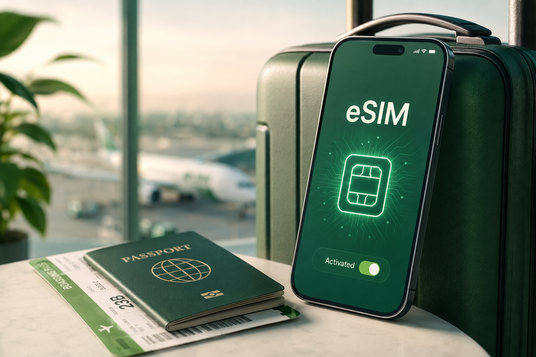

eSIM use has taken a noticeable step forward this year. Holafly’s 2026 summer report puts adoption at 28.1%, compared with 19% last summer. That puts the increase at 9.1 percentage points.
Adoption is highest in Oceania, at 40.2%. Asia is not far behind, at 34.6%. In both regions, eSIMs are already becoming a familiar choice for international travel.
Asia’s figures also reveal something interesting. Easy activation was the main reason for choosing an eSIM for 76.5% of travellers. Only 28.6% mentioned saving money on roaming. Price is clearly not the whole story. People also want less trouble and a service they can trust when they arrive.
North America has a different problem. Almost half of US travellers and nearly four in ten Canadians said they did not know about eSIMs before travelling. Millions of people may therefore be paying for expensive roaming or depending on public Wi-Fi without knowing there is another choice.
In one sense, this is encouraging. Lack of awareness is a problem that can be addressed. Better explanations and a simpler buying process could introduce eSIM services to a much wider group of travellers.
Europe is easy to misunderstand. eSIM adoption looks relatively low because people travelling within the EU can already use Roam Like at Home. It is free, familiar and usually meets their needs, so traditional roaming still has an important place.
The situation changes as soon as Europeans travel outside the EU. eSIM adoption rises from 19.9% for travel within the region to 44.8% for trips beyond it. European travellers are willing to use eSIMs, but mainly when they offer a real benefit.
Overall, eSIM adoption is growing for different reasons in different markets. Convenience is driving Asia, awareness remains the main issue in North America, and free roaming is shaping the European market. The larger change in travel connectivity may still be ahead.